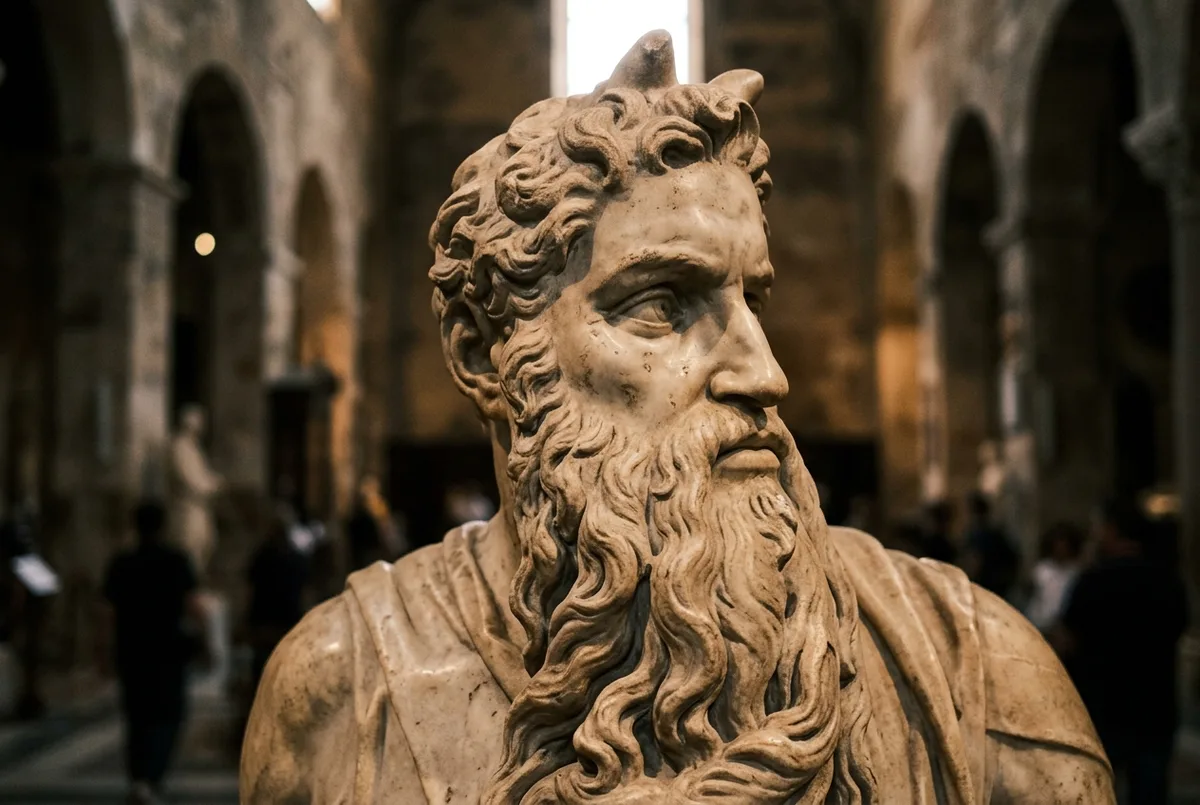
The Sistine Chapel ceiling is Michelangelo’s fresco cycle covering nine central scenes from the Book of Genesis, painted between 1508 and 1512 across more than 460 square metres of curved plaster. Here’s what I’d actually do before you walk in: pick one panel to genuinely study rather than trying to take in all nine at once, since the ceiling is high enough and detailed enough that scanning it quickly leaves most visitors with an impression rather than a memory. If you’re planning the ticket side of this visit too, the vatican pass ticket lineup on the homepage covers every current option, and my what to see in the Vatican Museums highlights guide puts this fresco in context alongside the museum’s other major stops.
What exactly did Michelangelo paint on the Sistine Chapel ceiling?
Nine central panels depicting scenes from Genesis, running from the Separation of Light and Darkness near the altar to the Drunkenness of Noah near the entrance, framed by painted architecture, prophets, sibyls and dozens of smaller figures called ignudi. The most famous single panel, the Creation of Adam, sits roughly in the middle of the sequence.
I’d tell anyone standing underneath it for the first time to resist the urge to only look for that one panel. The full cycle tells a connected story, and the surrounding prophets and sibyls are genuinely worth a slower look once you’ve found Adam.
Why is the Creation of Adam the panel everyone recognizes?
Because the composition, God’s outstretched hand nearly touching Adam’s, has become one of the most reproduced images in Western art, appearing everywhere from textbooks to advertising long before most visitors ever see the original in person. Seeing it at actual scale, high on a curved ceiling rather than flattened on a page, changes how it reads.
My honest take: it’s smaller within the overall composition than most people expect, tucked among eight other equally ambitious panels rather than standing alone. I’d still call it worth the wait, but I wouldn’t build your entire visit around finding just this one scene.
How did Michelangelo actually paint a ceiling this large?
Standing on a custom scaffold he designed himself, working in fresco, which means applying pigment to wet plaster so the color bonds into the wall as it dries. He worked largely alone for long stretches, with a small team of assistants handling preparation, and the project took roughly four years to complete, considerably longer than he initially expected when Pope Julius II first commissioned it.
I find this detail genuinely useful context for what you’re looking at: this wasn’t a team production in the way a modern mural often is. The scale and consistency across the whole ceiling comes from one artist’s sustained vision, which is part of why art historians still treat it as a singular achievement rather than a collaborative one.
Did Michelangelo paint lying on his back?
Not lying flat, despite the popular image. He stood on his scaffold, leaning backward to reach the ceiling above him, which was still physically brutal work that reportedly left him with lasting neck and back strain. The myth of him lying down likely comes from later dramatizations of the story rather than the actual working conditions.
I’d correct this specifically if you’ve heard the lying-down version before, since it’s one of the most repeated pieces of Sistine Chapel trivia and also one of the least accurate. The real physical toll was still severe, just not in the way most people picture it.
What is The Last Judgment, and is it part of the ceiling?
No, and this is a genuinely common point of confusion. The Last Judgment covers the entire altar wall of the Sistine Chapel, not the ceiling, and Michelangelo painted it more than two decades later, between 1536 and 1541, as a separate commission under a different pope.
I’d make a point of looking at both, since most visitors fixate entirely on the ceiling overhead and walk out without properly registering the second major fresco in the same room. The Last Judgment is darker in tone and considerably later in Michelangelo’s career, and the contrast between the two works is part of what makes standing in that room worthwhile.
What should you actually look for once you’re standing there?
The Creation of Adam first, since it rewards the least prior context and everyone recognizes it instantly. Then I’d point your attention to the prophets and sibyls seated along the edges of the ceiling, especially the Libyan Sibyl, whose twisting pose is considered one of the more technically difficult figures in the whole cycle. Finally, spend a few minutes on The Last Judgment before you leave, since it closes the visual story the ceiling opens.
I wouldn’t rush this. Attendants ask for silence inside the chapel, which I think actually helps: it’s one of the few genuinely quiet moments in an otherwise crowded museum route, and it’s worth using that quiet rather than hurrying through it.
How crowded does the Sistine Chapel get, and does that affect the experience?
Very, especially by late morning once tour groups from across the museum converge on the same room. I’d say the crowding affects your ability to linger more than your ability to see the ceiling itself, since the room is large enough that sightlines stay reasonably clear even when it’s full.
If a quieter experience matters more to you than saving money, an early morning or before-hours product times your visit to reach this specific room before the bulk of the day’s crowds arrive. I’d genuinely consider that trade-off if the ceiling is the single thing you came to Rome to see.
How does the Sistine Chapel connect to the rest of the Vatican Museums visit?
It sits at the very end of the standard museum route, after the Pio Clementino, the Gallery of Maps and the Raphael Rooms, and functions as the closing experience of the whole visit rather than a standalone stop. My Raphael Rooms guide and Gallery of Maps guide cover what comes immediately before it on that same route.
I’d read both before you go if you want the fuller picture, since the ceiling lands differently once you’ve seen what leads up to it. My Sistine Chapel tickets guide covers the practical side, how entry actually works and what it costs, since that’s a separate question from the art itself.
What I’d tell a first-time visitor
Spend real time on the Creation of Adam, but don’t stop there. The full nine-panel cycle and The Last Judgment on the altar wall together tell a more complete story than the one famous image most people arrive already knowing. For the deeper academic history of the restoration and the fresco technique, the Sistine Chapel ceiling entry at Wikipedia is a well-sourced place to go further than this page does.
I’d close with this: the ceiling is genuinely worth the hype, but the hype is also why so many visitors rush it. Give it the few extra minutes of quiet attention it asks for, and it earns its reputation on its own terms rather than just living up to a photo you’d already seen.
Frequently asked questions
How long did Michelangelo take to paint the Sistine Chapel ceiling?
Roughly four years, between 1508 and 1512, working largely alone with a small team handling preparation. It took considerably longer than originally planned.
Is the Creation of Adam the only famous panel on the ceiling?
No, though it’s the most recognized. The ceiling includes nine central Genesis panels total, along with prophets, sibyls and dozens of smaller figures worth slowing down for.
Is The Last Judgment part of the Sistine Chapel ceiling?
No. It covers the altar wall, not the ceiling, and Michelangelo painted it as a separate, later commission more than two decades after finishing the ceiling itself.
Did Michelangelo really paint lying on his back?
Not lying flat. He stood on a custom scaffold, leaning backward to reach the ceiling, which was still physically demanding but not the popular lying-down image most people picture.
How long should you spend looking at the Sistine Chapel ceiling?
I’d budget at least 20 to 30 minutes to actually look up properly rather than just walk through, plus a few extra minutes for The Last Judgment on the altar wall.