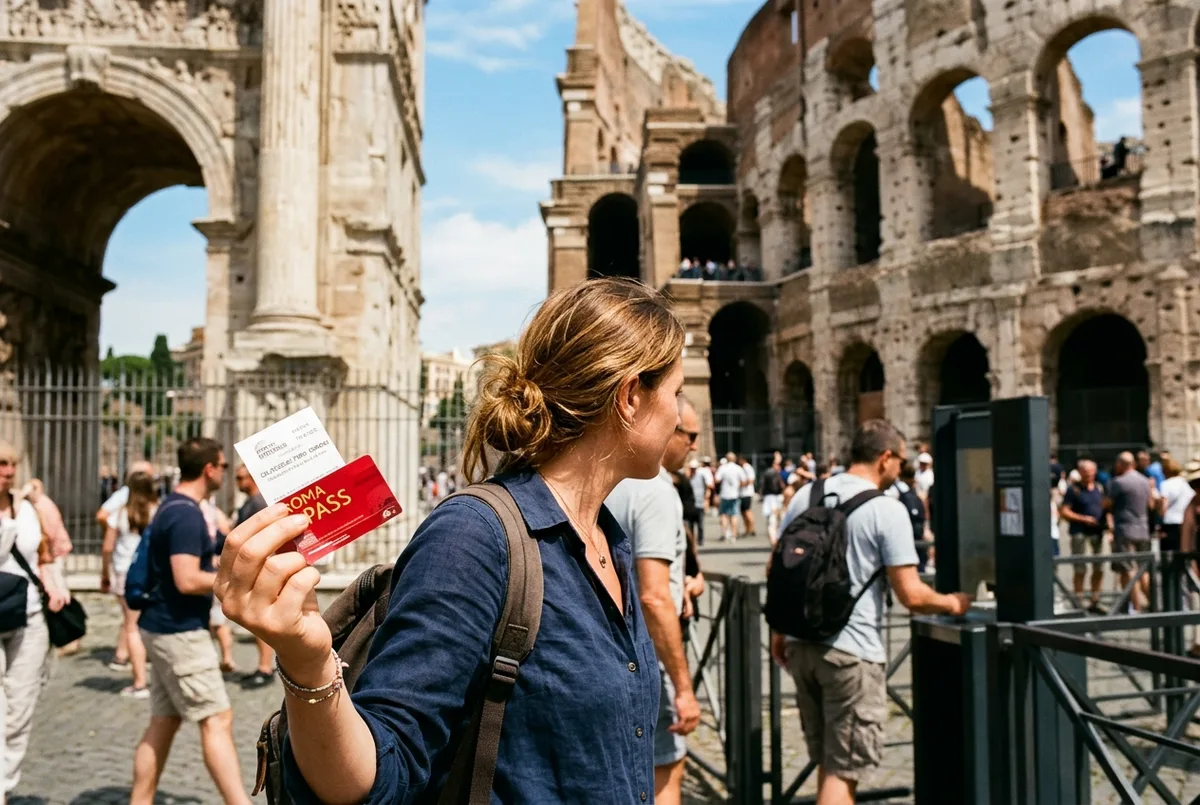
Roma Pass Colosseum access is the single inclusion most buyers care about most, since it’s also Rome’s most expensive individual attraction ticket, bundled together with the Roman Forum and Palatine Hill on the same combined entry. Here’s what I’d check next: the rest of the free and discounted list, because that’s where the pass either clears its own cost or doesn’t, depending on how many of those sites actually match your itinerary. None of this touches the Vatican, though, so if that’s your main draw, every current vatican pass ticket option is the better place to start.
What does the Roma Pass include at the Colosseum specifically?
Entry to the Colosseum, the Roman Forum, and Palatine Hill, all on the same combined admission that the standard individual ticket also covers. This is functionally the anchor inclusion of the whole card, since it’s the most expensive single ticket most Rome-bound travelers would otherwise buy separately.
I would count this inclusion first when running your own break-even math. If the Colosseum is already on your list regardless of the pass, that single inclusion does a lot of the heavy lifting toward making the card worth its price. The Colosseum’s own history is worth a quick read before you go, since knowing what you’re looking at changes how the visit lands.
Is the Colosseum entry free or discounted with the pass?
It’s included free with either version of the pass, as your first (or one of your first two) included attractions, depending on which pass tier you buy. After that first free entry, additional sites on your list shift to the discounted-entry list rather than free.
I’d book the Colosseum as your first-used attraction specifically, given how much it usually costs on its own. Using the free entry on a cheaper site first and saving the Colosseum for the discounted list is the kind of ordering mistake I’d actively avoid.
Does the Roma Pass include the Borghese Gallery?
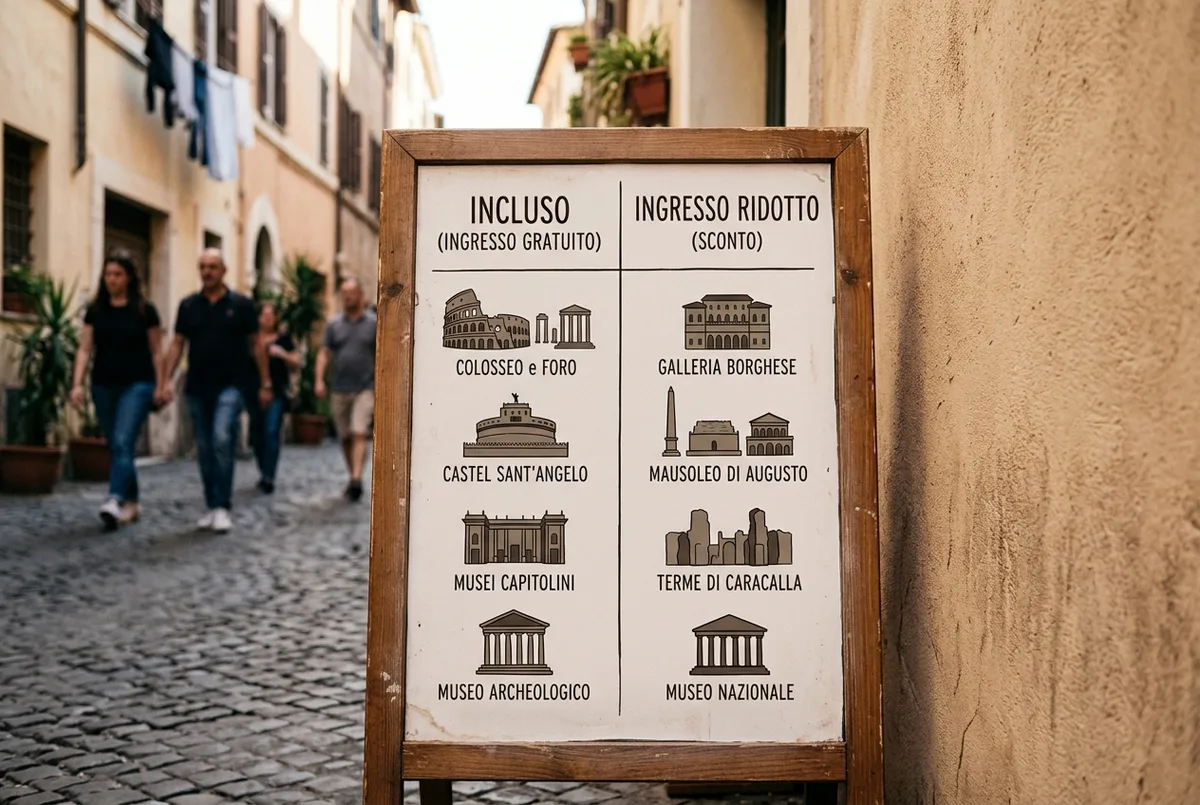
The Borghese Gallery has historically appeared on Rome tourist card partner lists in some form, though its own separate timed-entry reservation system and strict visitor caps mean it doesn’t always behave like a standard walk-up inclusion even when it’s listed.
I would confirm the Borghese Gallery’s current status and booking requirement directly before counting on it as part of your Roma Pass plan, since a reservation-capped site like this one needs its own advance booking regardless of what a pass technically covers.
What other museums does the pass typically cover?
Beyond the Colosseum complex, the list generally spans a range of Rome’s civic and state-run museums and archaeological sites, the Capitoline Museums among the most commonly cited, plus smaller specialty museums and historic sites scattered across the city.
I’d treat the exact list as something to verify close to your travel dates rather than memorize from any single source, this page included, since inclusions shift as the partner network changes over time. What matters for your decision is whether the sites on the current list overlap with what you actually want to see.
Are all included sites free, or are some just discounted?
Both. Your first attraction (or first two, depending on the pass version) comes free, and everything else on the list after that comes at a discounted rate rather than free. This two-tier structure is often misunderstood, and it directly affects the math on whether the card is worth it.
I would plan which site gets your free entry deliberately, using it on your most expensive planned stop, generally the Colosseum, rather than letting it default to whatever you visit first chronologically.
Does the pass cover the Vatican Museums or St. Peter’s Basilica?
No. Neither is included, free or discounted, because both fall under Vatican City’s own separate ticketing system rather than Rome’s civic and state museum network. This is worth repeating clearly, since it’s the most common point of confusion in this whole silo.
I would budget for the Vatican Museums as a fully separate purchase regardless of which Roma Pass tier you buy. My Vatican Museum ticket price guide covers current pricing for that ticket on its own.
How do you find the current, accurate inclusions list?
Check the official Roma Pass site directly before you buy, rather than relying on a static list from any blog post, including this one. Inclusion lists for city tourist cards rotate periodically as museums join or leave partner agreements, and buying based on stale information risks a mismatch with your actual plan.
My honest advice: cross-check your specific must-see list against the current official inclusions the week before your trip, not months in advance. A site that was included when you first researched your trip may have changed status by the time you actually travel.
Should you plan your visit order around the included sites?
Yes, I would. Since only your first one or two included attractions come free and the rest shift to discounted, the order you visit sites in genuinely changes how much value you get from the card. Visiting your most expensive planned site first is the simplest way to maximize that value.
I’d also group nearby included sites into the same day where the map allows it, since several of the civic museums that show up on these lists sit close enough together to visit back to back without much extra transit time, even with the pass’s unlimited transport already covering the trips between them.
What if a site you wanted turns out not to be included?
It happens, since the list isn’t static. If a specific museum or site you were counting on has dropped off the current partner list, I would simply buy that one ticket separately rather than assuming the pass covers something it no longer does.
My honest take: don’t let one missing inclusion sour the whole decision. Recalculate the break-even math with that site removed from the pass side of the equation and added as a separate cost instead, then decide again, calmly, whether the card still makes genuine sense for the rest of your itinerary once that adjustment is made.
What I’d actually plan around
Lead with the Colosseum, Roman Forum and Palatine Hill as your anchor inclusion, since that’s usually the most expensive single ticket on any Rome itinerary and the one most likely to make the card worth buying on its own. Beyond that, check the current official list against your specific must-see sites rather than assuming broad coverage, and use your free entry on your priciest planned stop. For the full worth-it calculation with real break-even numbers, my page on whether the Roma Pass is worth it walks through a typical two-day itinerary, and my complete Roma Pass guide covers the card’s transport allowance and pricing tiers in full.
Frequently asked questions
Does the Roma Pass include Colosseum underground access?
Special-access areas like the underground or the arena floor typically require a separate, upgraded ticket type beyond standard entry, pass or not. I would check the specific ticket tier the pass covers before assuming it includes an upgraded route.
Do I still need a timed entry slot for the Colosseum with the pass?
Often yes, since the Colosseum uses timed entry regardless of how you pay for the ticket. I would book your specific time slot as soon as your dates are confirmed rather than assuming pass ownership alone guarantees walk-up access.
Is the Roman Forum a separate inclusion from the Colosseum?
No, they’re bundled on the same combined ticket along with Palatine Hill, so a single Colosseum entry through the pass covers all three sites on one visit.
Does the discounted-entry list change more often than the free-entry list?
It can, since partner museums join and leave the broader discount network more frequently than the smaller core free-entry tier changes. I’d double check the discounted list specifically if a particular smaller museum is important to your plan.