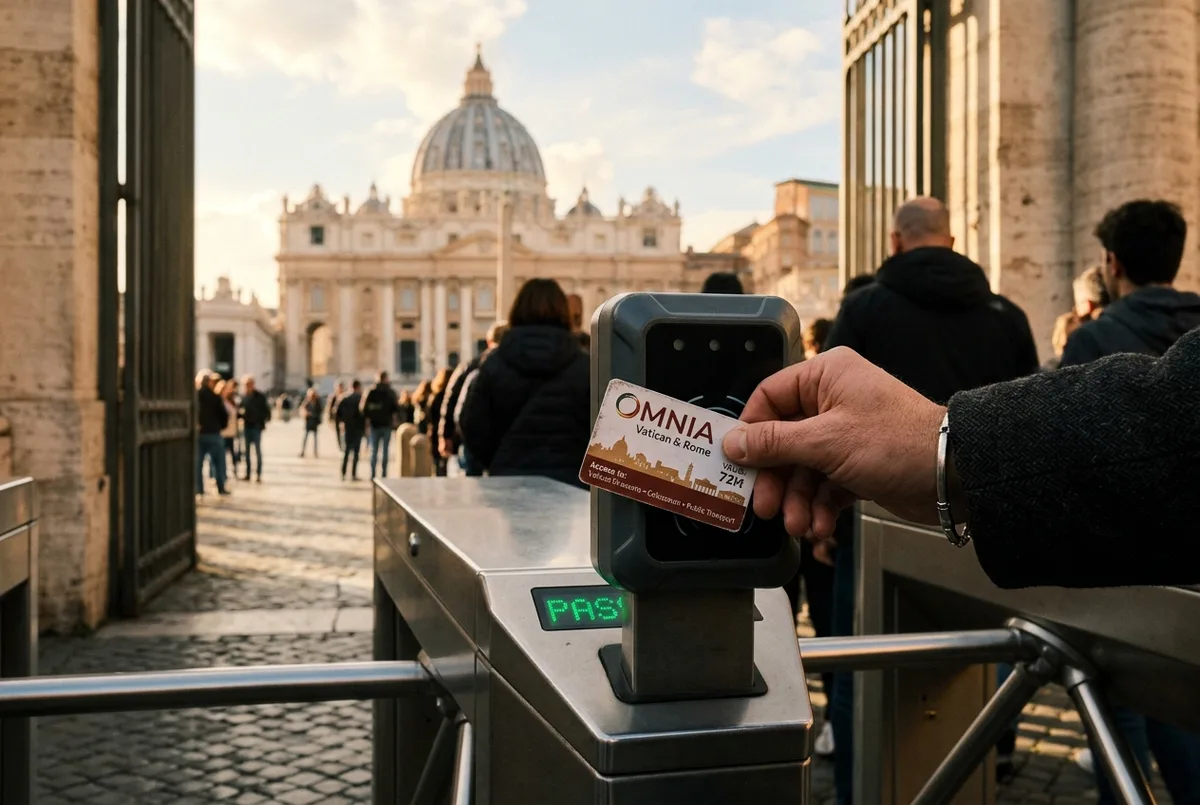
The omnia card bundles Rome civic attraction access, city transport and Vatican Museums skip-the-line entry into a single tiered pass, most commonly sold in a 72 hour version. Here’s the detail worth knowing before you compare prices: the exact tier lineup and inclusions have changed over the card’s history, so I’d verify the current offer directly rather than trust an older breakdown. For the full picture of what a Vatican ticket costs on its own, the vatican pass ticket homepage is worth checking too.
What does the Omnia Card actually include?
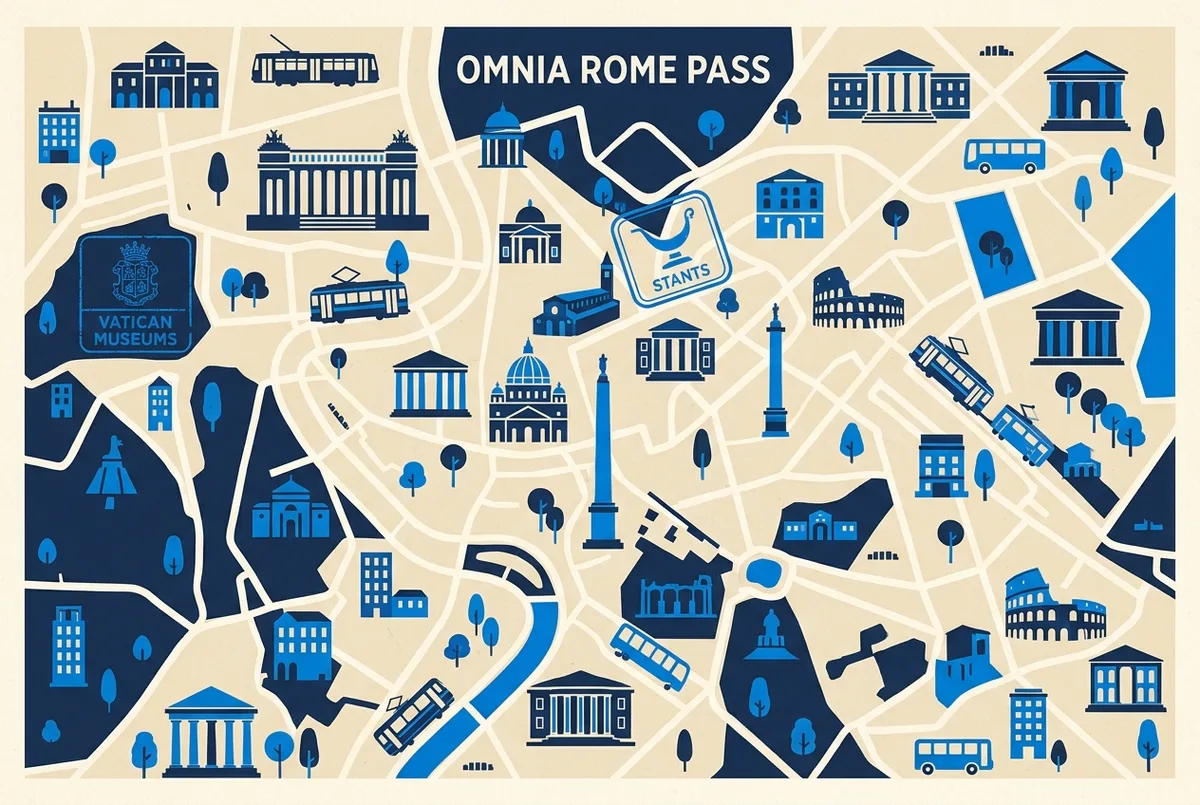
The core bundle covers Rome’s major civic and state museums, city transport, and a reserved-entry Vatican Museums ticket that includes the Sistine Chapel. That Vatican inclusion is the card’s defining feature against every Rome-only city card.
I would read the current inclusion list carefully rather than assume every Rome attraction is covered. Multi-attraction cards like this one typically bundle the major sites plus discounts on smaller ones, not blanket free entry everywhere.
How much does the Omnia Card cost?
Pricing is tiered by duration, and I’d check the current listed price directly since these figures shift periodically and I don’t want to quote you a number that’s already out of date by the time you book. What stays consistent is the value proposition: Rome access plus Vatican access in one purchase.
My honest take: don’t anchor your decision to a number you saw months ago in a forum post. Pull the live price before comparing it against buying everything separately.
What’s the difference between the Omnia Card and “omnia pass”?
Nothing, they’re the same product, just referred to slightly differently depending on where you’re reading about it. I wouldn’t overthink the naming; both terms point to the identical bundled card.
I’d search using either term interchangeably when you’re comparing prices, since providers and reviews use both without meaningfully distinguishing them.
What does the omnia card 72 h tier specifically cover?
The 72 hour tier is the most commonly referenced duration, giving three consecutive days of access to the bundled Rome and Vatican inclusions from first use. I’d treat this as the standard tier most travelers end up comparing against.
I would plan your sightseeing days around activating the card on a day you can realistically use it fully, since a 72 hour window starts counting down from first use, not from purchase.
Is the Vatican Museums entry on the Omnia Card skip-the-line?
Yes, that’s the whole point of bundling it in rather than requiring a separate standard-line ticket. It’s meant to save you the wait, not just the separate purchase.
I’d still arrive at your assigned entry window promptly regardless, since a skip-the-line ticket moves you past the general queue but doesn’t excuse you from a scheduled time slot entirely.
Does the Omnia Card cover the same Rome sites as the Roma Pass?
Largely yes, the Rome-side inclusions overlap heavily with what the Roma Pass offers, civic museums and transport chief among them. The meaningful difference sits entirely on the Vatican side, where Omnia adds coverage the Roma Pass skips.
I would compare the two directly if you’re still deciding, since the Rome-side overlap means the decision usually comes down to whether you need that Vatican inclusion or not.
Do I need to book a specific Vatican entry time with the Omnia Card?
Typically yes, the bundled Vatican Museums entry still runs on a reserved time slot rather than open walk-in access, even though it’s included in the card price. I’d treat the Vatican portion as its own scheduled booking within the larger card.
I would book that Vatican time slot as early as the card allows once you have it, since popular entry windows fill regardless of which product got you the ticket.
Should I buy the Omnia Card directly or through a reseller?
I’d buy through an official or clearly authorized channel rather than an unverified reseller site, given how much confusion already exists around Rome city cards and Vatican tickets. A card with the wrong or outdated inclusions isn’t worth a small discount.
My honest advice: cross-check whatever price you’re offered against the range I’ve described here, and if something looks unusually cheap for a card that includes Vatican access, treat that as a reason to double-check the source before paying.
What I’d actually book
If your trip covers both Rome’s civic sites and the Vatican Museums, the Omnia Card is the simplest single purchase for both, and I’d check the current 72 hour tier price as your starting comparison point. For the direct head-to-head against the plain Roma Pass, my Omnia Card vs Roma Pass comparison walks through exactly when each one wins. If you’re still weighing every Rome city card option, my Vatican city pass roundup and my complete Roma Pass guide cover the rest of the field, and my Roma Pass price and buying guide shows the official purchase path for the Rome-only alternative. The Roma Pass official site is worth a look for current Rome-side pricing before you commit either way.
Frequently asked questions
Is the Omnia Card the same as buying separate Rome and Vatican tickets?
Functionally similar in coverage, but bundled into one purchase and typically priced to beat buying everything separately, provided you’ll actually use most of what’s included.
How long does the Omnia Card last?
It’s sold in tiered durations, most commonly a 72 hour version, running consecutively from first use rather than from the purchase date.
Does the Omnia Card include the Colosseum?
Rome’s major civic and state sites are generally part of the bundle, though I’d confirm the current specific list directly, since inclusions can shift.
Is the Vatican Museums ticket on the Omnia Card time-slotted?
Yes, even though it’s bundled into the card, the Vatican entry still runs on a reserved time, so I’d book that slot as early as the card allows.
Can I use the Omnia Card if I’m only in Rome for two days?
You can, though the most common tier runs 72 hours, so a shorter stay may mean you’re not using the full value the card offers.